TECH ANALYSIS: A rotating wing and unusual vane – why Ferrari’s radical rear has got people talking in Bahrain
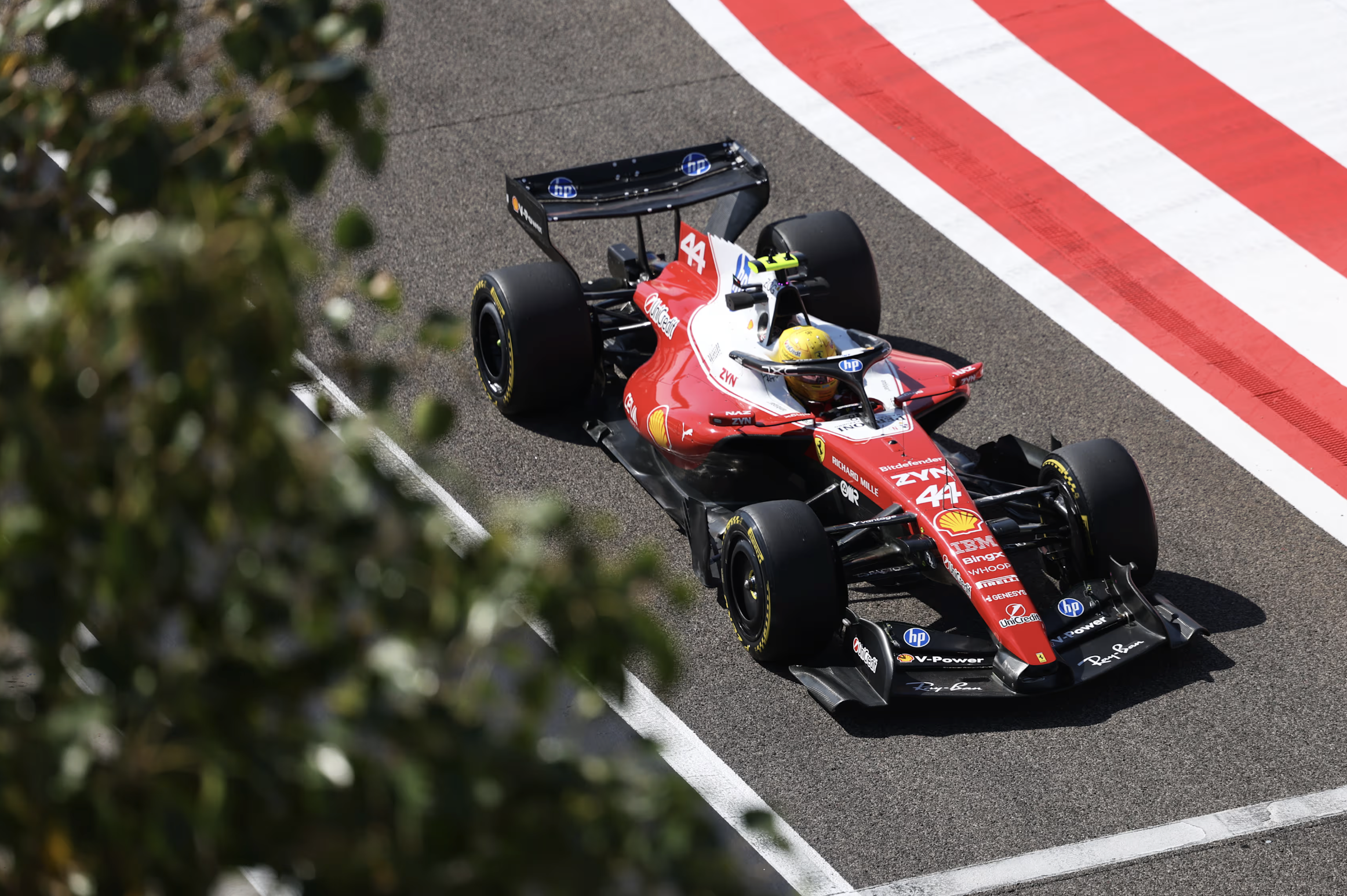
Ferrari generated plenty of attention on the first day of the second pre-season test in Bahrain thanks to their unusual vane (termed a flow turning device by the team) located behind the exhaust. On the second day they continued to get people talking with a radical flip rear wing element, which rotates itself upside down in straight line mode.
Technical contributor Mark Hughes delves into each of these designs to examine what they are intended to do…
Flow turning device
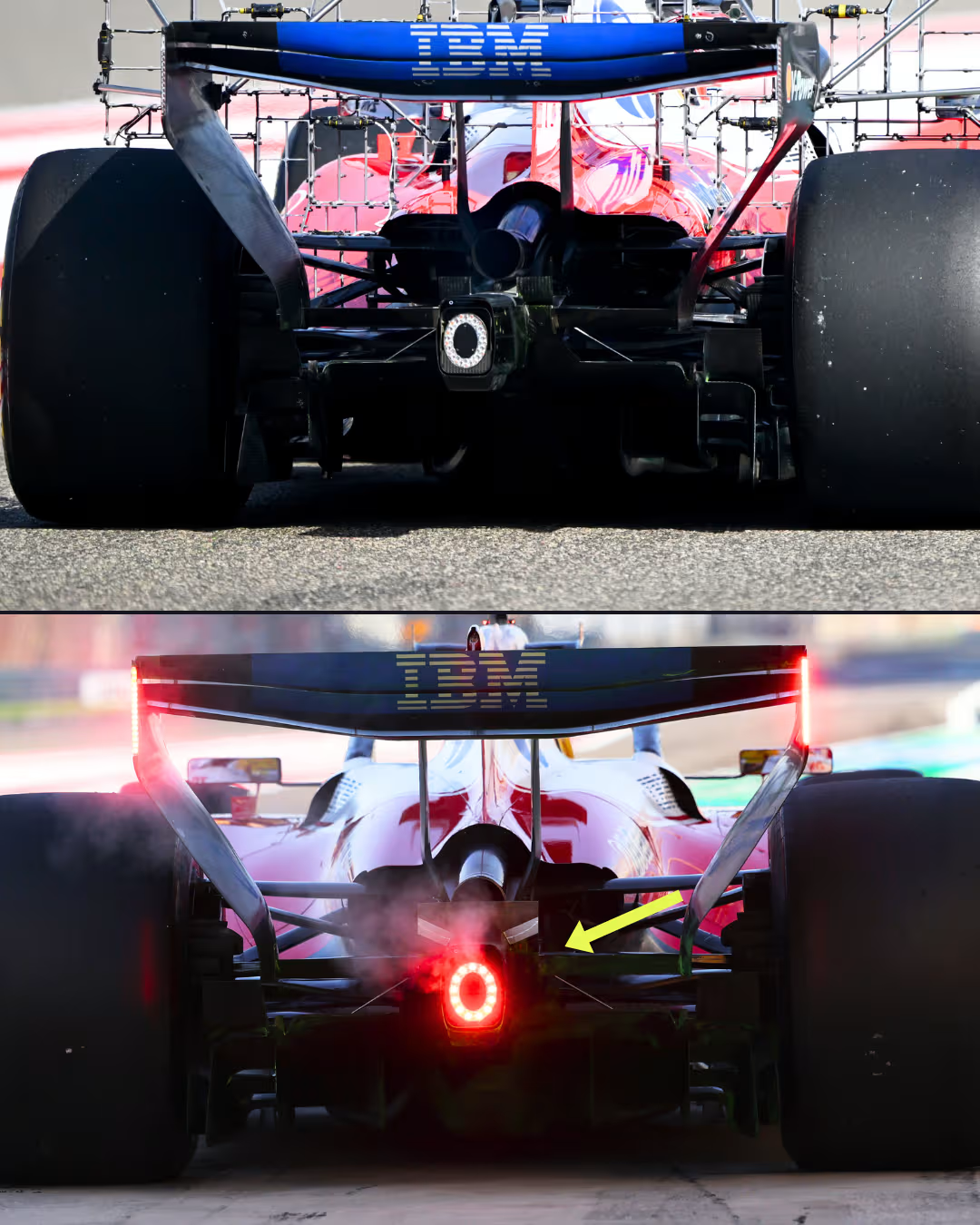
Ferrari’s ‘flow turning device’ is located close to the bottom of the wing assembly. It is roughly square in section – and aligned with the gap ahead between the two rear wing pillars – and is angled very steeply upwards.
It appears to be directing exhaust flow to the underside of the rear wing main plane, but it is almost certainly also energising the airflow exiting the diffuser in that central part of its width.
However, this unique feature is built upon another – one that was already on the car in the first Bahrain test: lower bodywork which extends the diffuser expansion ramp further back than the regulation rearmost point for the diffuser. This bodywork – separate from the actual physical diffuser – effectively makes the diffuser longer and therefore more effective in speeding up the underfloor’s airflow and thereby increasing downforce.
It seems such an obvious benefit that it begs the question as to why only Ferrari have done it. The answer lies in the Ferrari’s differential and driveshafts.
The complex series of dimensional boxes to which the bodywork must comply stipulate that any bodywork in this lower section of the car can extend back no more than 6cm from the driveshafts. On other cars, 6cm back from the driveshafts would still be within the diffuser region.
However, Ferrari has placed the diff so far back and angled its driveshafts back to such an extreme degree that it opens out this extra volume behind the diffuser in which the aerodynamic-aiding bodywork has been made possible.
The regulations stipulate that the diff can be sited plus or minus 6cm from the rear axle line. Ferrari had chosen to put it the maximum 6cm back so as to create the volume behind the diffuser in which to fit the extra diffuser-enhancing bodywork.
The technical limitation on how far the driveshafts can be angled is formed by the constant velocity joints, which connect the gearbox to the differential and the driveshafts to the diff. They allow the driveshafts to rotate while accommodating the suspension’s movement.
Accommodating angled driveshafts involves careful design of linkages to prevent vibration and failure. This in turn impacts upon the design of the whole transmission assembly, so copying the Ferrari layout during the season would not be feasible for other teams. The Haas and Cadillac cars however use the Ferrari gearbox so, in theory, they might be able to emulate the swept back driveshafts to take advantage of the bodywork loophole.